
Common Questions About Sewer Inspection in Millville
It shows the pipe material, the condition of the walls and joints, root intrusion, grease or scale, low spots where water collects, cracks and breaks. It does not show what is happening outside the pipe, such as soil washout, unless the damage reaches the interior.
It is a smart step for an older home or one with large trees, since the sellers' inspection may not include the lateral. If the home is on septic, New Jersey adds a third party septic inspection at sale, and it is a separate process. The Cumberland County Department of Health explains the septic rules.
Yes. We provide the video recording and written notes on what was seen and at what distance. You can share them with a buyer, a seller, your insurance agent or another contractor.
A straightforward run from a cleanout is usually a short visit. A line that needs cleaning first, has no cleanout or has multiple bends takes longer. We will tell you what to expect before starting.
Yes. A locator on the surface picks up the camera's transmitter, so we can mark the line and its depth on the ground. That helps when a repair or a new cleanout is needed.
The city says the property owner maintains and cleans the sewer lateral. It also says the Sewer Department will not replace a missing cleanout cap, which is the homeowner's job. Ask the Millville Construction Office if a planned repair needs a permit.
What a sewer camera inspection is for
A sewer line is out of sight, so most problems are guessed at until something fails. The camera replaces the guess. It tells you if a backup was a one-time clog or a sign of a damaged pipe.
Inspection also gives you a baseline. A recording today lets you compare the line after a repair, a cleaning or a few years of use.
Gurgling drains and slow backups: what is in the line?
A gurgling toilet, a tub that bubbles when the washer drains, or a slow drain that returns after cleaning all point to something in the main line. It could be grease, roots, a low spot or a broken joint.
A sewer camera inspection answers the question with a picture, so you pay to fix the right thing. It is the branded term for what many people search as sewer line camera, sewer video or looking down the line.
Reading what the camera finds
Each finding means something different for your next step.
| What you see | What it means | Next step |
|---|---|---|
| Grease or scale on the walls | Buildup that narrows the pipe | Cleaning or hydro jetting |
| Roots at joints | Water is entering through a gap | Cut roots, then judge the joint condition |
| Offset or separated joint | Pipe sections no longer line up | Spot repair, often with digging |
| Belly or low spot | Water pools and solids settle | Monitor, clean regularly or replace that section |
| Cracked pipe | Wall is broken and may leak out | Lining or section replacement |
| Collapse | Camera cannot pass the point | Excavation and replacement |
Not every finding calls for work. A small offset in a line that drains well may only need monitoring. We say plainly when a finding is cosmetic and when it is urgent.
How an inspection visit goes
The visit is short when the line is open.
- Find the access pointA cleanout is the easiest entry. Without one, the camera may go in through a toilet flange or roof vent.
- Clean if neededIf waste or grease blocks the view, the line is cleared first so the camera can see the pipe wall.
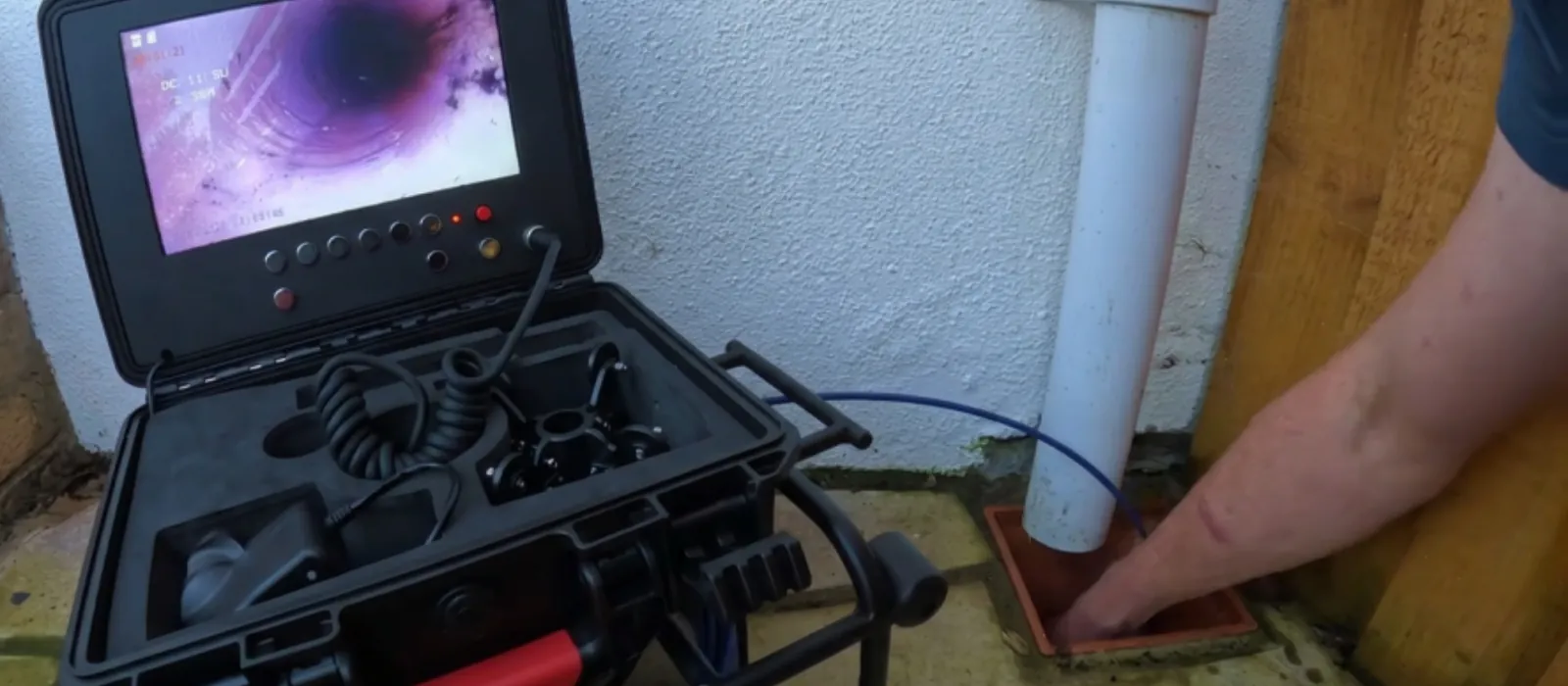
- Run the cameraWe record as it travels, noting distances, bends and any defects, and mark the line on the surface if needed.
- Explain and reportYou get the recording and written notes, plus a plain explanation of what each finding means.
Using an inspection when you buy or sell
A home inspector usually checks what can be seen. A sewer camera looks at the part nobody sees. For a buyer, the recording can support a price conversation or a repair request. For a seller, a clean report can calm a buyer.
If the property is on septic, the rules differ. A third party septic inspection is required whenever a home is sold, and the inspecting contractor must be registered with the county office. A sewer camera is not a substitute for that inspection, so ask the county what applies to your sale.
For a sale in Millville, the Certificate of Occupancy is applied for through the Fire Department, according to the city page. Ask the city early so the timeline holds.
What a camera cannot tell you
A camera shows the inside surface of the pipe. It cannot measure soil washout around a pipe, and it may not pass a sharp bend, a bad offset or a full collapse. When that happens, the inspection ends there, and the note tells you where.
Murky water, heavy buildup or a belly that holds water can also limit the picture. Cleaning first improves the view. If a result is unclear, we say so and suggest a second look after cleaning, not a guess.
When the inspection leads to repair
If the camera finds damage, the next question is how to fix it. Our sewer line repair page covers spot repair, lining and replacement, with the trade-offs for each.
If the finding is buildup in a sound pipe, cleaning solves it. See drain cleaning for the usual methods. A line that keeps clogging after cleaning is a reason to book a follow-up look.
Local note for Millville and Vineland
In Millville, the Sewer Utility asks residents with drain problems to call it first, since its staff check the sewer main and report their findings. A camera result that shows the blockage is past your property line is useful to bring to that conversation.
Vineland sits just north and has its own septic oversight through the Vineland City Health Department, not the county. If you own in Vineland, check which office handles a septic sale inspection before you book.
Source type: City of Millville Sewer Utility page, Cumberland County septic program page and Vineland municipal sources.
Good times to book a camera check
Consider an inspection when any of these apply.
- Drains are slow in more than one fixture, or a toilet gurgles when another fixture runs.
- A backup happened and the cause was never confirmed.
- You are buying a house with older plumbing or large trees near the lateral.
- A sewer smell lingers in the yard or basement with no obvious source.
- Before a renovation that adds fixtures or changes the line.
- After repeat cleanings that did not hold.
What changes the price
Every job gets a clear price before work starts. These are the things that move it up or down.
A cleanout makes the job quick. If the camera must enter through a toilet or vent, setup takes longer.
A line full of grease or debris must be cleared before the camera can see anything.
A longer lateral takes more time and cable than a short one.
Surface locating adds time but is useful before any digging.
A recording with written notes takes more time to prepare than a quick look.
Sources and standards
These are the references behind the guidance on this page. Rules and contacts change, so confirm details with the agency.
- New Jersey Uniform Construction Code, plumbing subcode (the Millville Construction Office posts the permit form)
- State Board of Examiners of Master Plumbers, Division of Consumer Affairs, for checking any plumber's license
- City of Millville Sewer Utility guidance on laterals, cleanouts and sewer overflows