
Common Questions About Hydro Jetting in Millville
Yes. The 24/7 emergency line takes calls at night, on weekends and on holidays. We offer same-day appointments when available and do not promise an arrival time. If jetting turns out to be the wrong tool for your pipe, we will say so before work starts.
It depends on the clog. A snake opens a channel through a blockage. Jetting washes the pipe wall, so it suits grease, scale and clogs that keep returning. For a single soft blockage in a healthy pipe, a cable is often enough.
It can if the pipe is already cracked, collapsed or badly corroded. That is why a camera look comes first when we have doubts. Pressure and nozzle choice are matched to the pipe material and condition, not set to maximum.
A jetting nozzle with a cutting head can clear root growth inside a pipe. Roots tend to regrow through joints, so a camera look afterward tells you if the pipe needs repair or a regular cleaning schedule.
Repeat backups after a recent cable cleaning, slow drains throughout the house, gurgling in toilets and a lingering sewer odor all point to buildup on the pipe wall. A camera confirms what is there before we choose a method.
Yes. Grease from kitchens is the classic repeat clog. Millville has a grease and oil ordinance aimed at keeping fats out of the sewer, so a kitchen that jets on a schedule is easier to keep compliant. Ask the Sewer Utility what the ordinance requires of your business.
When the job calls for it, yes. The city's FAQ says a plumber cleaning a sewer line must go past the curb to the center of the street. We plan the cleaning length with that in mind.
What hydro jetting actually does
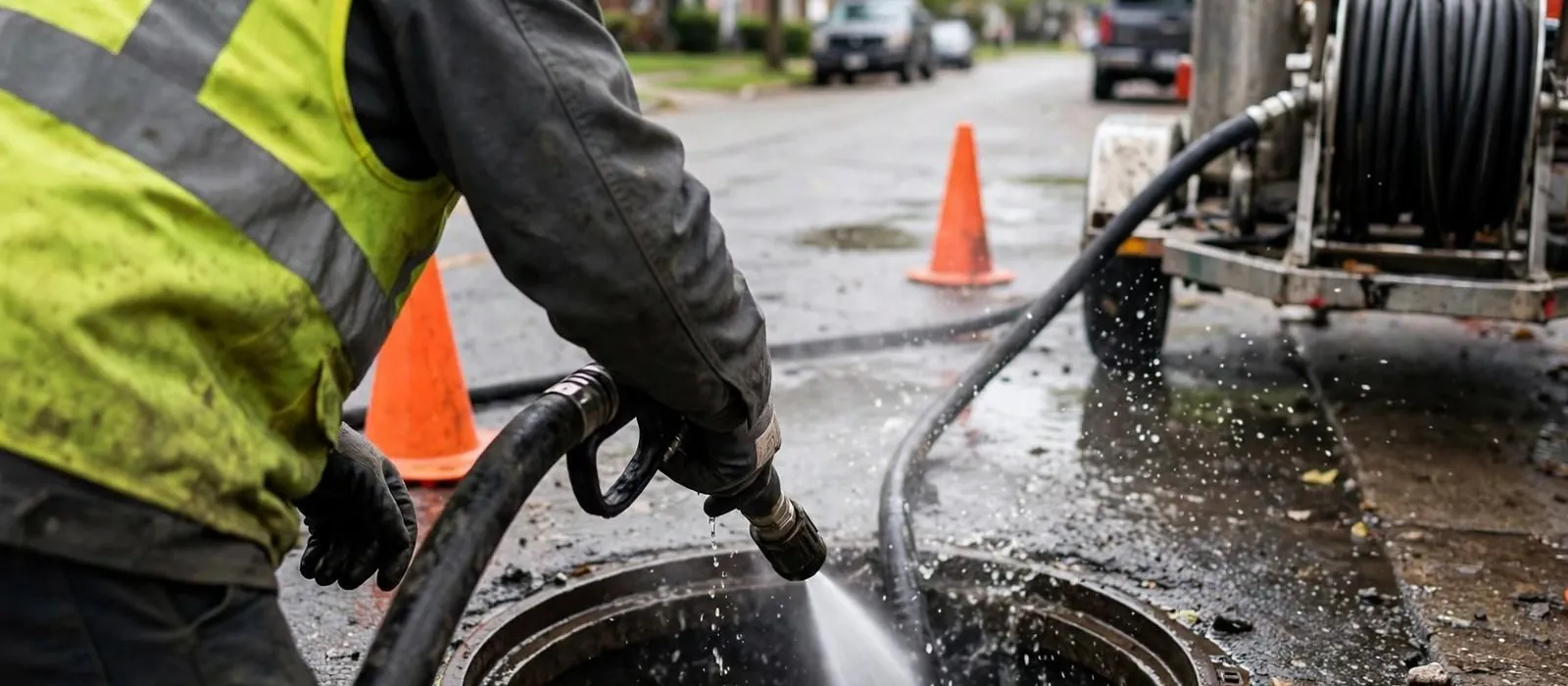
A jetting machine pumps water through a hose that ends in a nozzle with rear-facing jets. The jets pull the hose forward and spray the pipe wall in every direction. Grease softens, scale peels off, and loose debris flushes toward the main.
A cable cleaner pushes through a clog. A jet cleans the pipe as it travels. That difference explains why the same drain can stay open for a year after jetting and clog again in a month after a snake.
Water pressure is a setting, not a constant. A trained operator picks the pressure and nozzle for the pipe in front of them. Cast iron, clay and PVC each behave differently.
When a backed-up line is an emergency
Sewage rising in a floor drain, a toilet that will not flush and water pooling at the lowest fixture all mean the line is blocked past the point where waiting helps. Stop running water and call the 24/7 emergency line, because every flush or load of laundry adds to the overflow.
We will ask which fixtures are affected, because that tells us whether the blockage sits in a branch or the main. That answer decides whether jetting is the right first move or whether a camera look should come first.
Snaked it and it clogged again?
A line that opens up and then backs up again a few weeks later still has buildup on the wall. The cable made a hole in the blockage, and the leftover grease or roots caught the next batch of waste.
That pattern is the best sign that hydro jetting is the better next step. We confirm with a camera when we can, then choose between jetting, a repair, or a maintenance schedule.
Snake, jet or camera first
The right tool depends on what is in the pipe. Use this as a decision guide, then let a technician confirm it on site.
| Situation | Best first move | Why |
|---|---|---|
| Single soft clog, first time | Cable or snake | Quick and gentle, and the pipe is likely healthy |
| Clog returns within weeks | Hydro jetting | Scrubs the wall instead of poking a hole |
| Heavy grease from a kitchen | Hydro jetting | Hot, high pressure water breaks down fat that cables smear |
| Roots at joints | Cutting nozzle or cable, then camera | Roots regrow, so check the joint condition |
| Old pipe with suspected cracks or a collapse | Camera first | Pressure can worsen a weak pipe |
| Sewage backing up with no history | Cable first, camera next | Opens flow fast, then shows the cause |
If the camera shows a broken section, the plan changes from cleaning to sewer inspection findings and a repair decision.
When not to jet
Jetting is the wrong tool for a collapsed pipe, a large offset joint or a pipe that is mostly rust flake. The water has nowhere to go, and pressure can force debris through a weak spot.
Fragile or unknown pipe is the reason we look first. If a camera cannot pass because of a collapse, no cleaning method will help and the job moves to repair.
Jetting is also unnecessary for a plain fixture clog. A trap or short branch is a job for a hand tool, and our drain cleaning page covers it.
How a jetting visit runs
The order matters because it keeps a risky pass from happening on a weak pipe.
- Find the access pointA cleanout is best. Without one, the line may be reached through a toilet, roof vent or other opening.
- Run a camera when it makes senseA quick look shows the pipe material, the buildup and any damage before pressure goes in.
- Jet in passesThe nozzle moves forward and back through the line, cleaning from the access point toward the street.
- Re-check and reportWe confirm flow and explain what we saw, including anything that needs follow-up repair.
Kitchens, restaurants and other food businesses
Fats, oils and grease are the main cause of repeat sewer blockages in food service. Millville has a grease and oil ordinance aimed at stopping these blockages, and the city has food businesses in mind. A line that gets jetted on a schedule is a lot less likely to back up in the middle of a dinner rush.
If you run a restaurant or deli, ask the Sewer Utility what the ordinance expects from your business and keep service records. Our commercial plumbing page covers other work for shops and kitchens.
Grease traps and interceptors need their own cleaning. Jetting the line downstream does not replace that.
What a sewer backup means for the rest of your day
A backup is one of the few plumbing problems that is a health issue as well as a repair issue.
Stop adding water
No flushing, laundry, dishwasher or long showers. Every gallon has nowhere to go but the lowest drain.
Keep people away
Sewage on a floor carries bacteria. Keep children and pets out of the area and avoid touching it with bare hands.
Do not use chemical cleaners
They do not cut through a main line clog and can burn skin during cleanup.
Call the 24/7 line
Tell the dispatcher which fixtures are backing up and which is the lowest one affected.
Bridgeton and the nearby towns
Bridgeton water and sewer are run by the City of Bridgeton Division of Water and Sewer, and its city code lets officials enter a property to inspect pipes connected to the supply facility. If you are in Bridgeton and unsure where a line ends, check with the Division before assuming the problem is yours. Our Bridgeton page covers that area, about 13 miles west of Millville.
Source type: City of Bridgeton code Chapter 360 on eCode360.
What changes the price
Every job gets a clear price before work starts. These are the things that move it up or down.
A long run from a cleanout takes more time than a short branch, and a hard-to-reach line adds setup work.
Heavy grease or scale needs more passes with the nozzle than a light film.
Adding a camera look before or after jetting adds time but shows whether the pipe is sound.
A fragile pipe may need a lower pressure approach or a different repair path.
After-hours calls are handled on the 24/7 line, and you get a clear price before work starts.
Sources and standards
These are the references behind the guidance on this page. Rules and contacts change, so confirm details with the agency.
- New Jersey Uniform Construction Code, plumbing subcode (the Millville Construction Office posts the permit form)
- State Board of Examiners of Master Plumbers, Division of Consumer Affairs, for checking any plumber's license
- City of Millville Sewer Utility guidance on laterals, cleanouts and sewer overflows