
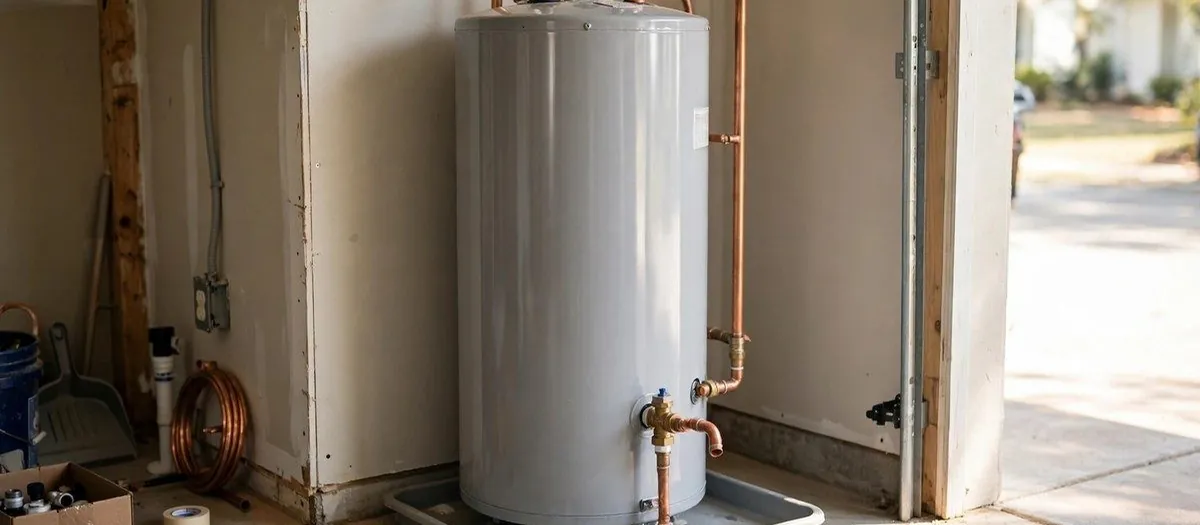
Common Questions About Water Heater Replacement in Millville
Yes. Our 24/7 emergency line takes calls at any hour, including nights, weekends and holidays. We cannot promise an arrival time, but we will tell you what to shut off and what to move out of the way while the visit is arranged.
Same-day appointments are offered when available, so a heater that fails in the morning may be handled that day.
The price depends on the tank size, fuel type, venting, how much code-related work the location needs and whether the old unit is easy to remove. A direct swap of the same type in the same spot sits at the simple end. A fuel change or a moved heater sits at the other.
We give a clear price before work starts, so you can decide with the full number in front of you.
A drip at the top is often a loose fitting, a bad supply connection or a relief valve line, and those can be repaired. If water is seeping from the seam of the tank or the bottom, the inner tank has usually failed and replacement is the sensible route.
Our water heater repair page covers the leaks that can be fixed without a new tank.
Age, leak location and repair history decide it. A failed thermostat or heating element on a younger tank is a repair. A tank that leaks from the shell, or that needs repeated fixes, is near the end of its life.
The table above lays out the common symptoms side by side.
Often yes, but it is a bigger change than a like-for-like swap. A heat pump unit needs electrical capacity, room for airflow and a condensate drain, and the old gas piping and venting have to be dealt with properly.
Ask for the price of both options before you choose, and ask the Millville Construction Office whether the job needs a plumbing permit.
No hot water is urgent for most households, but it is not a flood. First check the breaker for an electric unit or the pilot and gas control for a gas unit. If those look normal, the thermostat, element or burner assembly may have failed.
If the tank is old or wet underneath, replacement may make more sense than another repair.
Removal of the old unit is part of a replacement visit, and the drained tank is taken out with the job. If it is stuck in a tight closet or basement corner, mention that on the phone so the right help is planned.
The city's water is soft, so scale buildup inside the tank is a smaller concern here than in hard water areas. That does not make a tank last forever. Corrosion, anode wear and ordinary age still end most heaters.
When a leaking water heater is an emergency
A water heater holds dozens of gallons, and a failed tank can release most of that onto your floor in a short time. Water pooling near the base, running from a seam or spraying from a fitting counts as an emergency. So does any leak near a panel, furnace or finished flooring.
A slow drip at a pipe joint is less urgent, but it still deserves a prompt call because a small leak keeps wetting the same spot. After-hours calls are handled by our 24/7 emergency line, and we offer same-day appointments when they are available.
What to do while you wait
These steps limit damage and keep you safe. Do them only if you can reach the controls without stepping through standing water.
Close the cold supply
Turn the valve on the cold pipe above the heater clockwise. This stops new water from refilling the tank as it leaks.
Cut the power or gas
Switch off the breaker for an electric heater. For gas, turn the control knob to off. If you smell gas, leave the building and call 911 and your gas utility from outside.
Do not touch wet electrics
If water is reaching outlets, appliances or the panel, stay out and call for help. Water and live circuits are a shock hazard.
Protect what you can
Move boxes and stored items off the floor. Use towels or a wet vacuum at the edges, and keep a hose out of it unless you are draining on purpose.
Repair or replace: a decision by symptom
Not every heater problem means a new tank. This table shows which symptoms usually point to a repair and which point to replacement.
| What you see | Likely cause | Usual call |
|---|---|---|
| Water at the tank base or seam | Inner tank has corroded through | Replace |
| Drip at a pipe or valve | Loose fitting or worn valve | Repair |
| No hot water, tank dry underneath | Failed element, thermostat or burner part | Repair, unless the tank is old |
| Rust colored hot water | Anode spent or tank corroding inside | Replace if the tank is old |
| Rumbling or popping sounds | Sediment hardened on the tank bottom | Flush, or replace if heavy |
| Repeated repairs in a short span | Tank wearing out overall | Replace |
If your heater is past the middle of its expected life, the repair has to be weighed against the age. A new part in a worn tank can fail again soon after.
Why tanks fail and what the anode rod does
Inside most tank heaters sits an anode rod, a metal rod that corrodes first so the steel tank does not. Once it is used up, the tank wall starts to rust. Anode rod replacement can extend the life of a tank that is still sound, but it cannot repair a tank that is already corroded through.
That is why the age and condition check matters before any money goes into the unit. A tank that shows rust at the fittings or dampness underneath is usually past the point where a rod will help.
No hot water at all
If the water runs cold, check the simple causes first. An electric heater may have a tripped breaker or a reset button that popped. A gas heater may have a pilot that went out. If you relight a pilot, follow the label on the unit exactly, and stop if you smell gas.
When the basics check out and the heater still produces nothing, a failed heating element, thermostat, gas valve or thermocouple is likely. A technician can test these parts, and the answer tells you whether to repair or replace.
Sizing, fuel type and what comes out
A replacement should match how your household uses hot water, not just the size of the old tank. A family that runs showers, a dishwasher and laundry close together needs more recovery than a couple that spreads usage out. An undersized tank runs out. An oversized one costs more to buy and to keep hot.
Fuel matters too. Swapping gas for gas or electric for electric is the simple path. Changing fuel can mean new gas piping, new venting or a new circuit, and each of those adds work to the job. Tell us your current setup and what you are considering when you call.
Heat pump water heaters as an option
Some homeowners ask about swapping a gas tank for a heat pump water heater. These units move heat from the surrounding air into the tank, so they need open space around them, a drain for condensate and a suitable electrical supply. They are worth pricing next to a standard replacement, since the right choice depends on your space and your usage.
How the replacement visit runs
A typical swap follows the same order each time, with changes when the location is tight or the fuel is changing.
- Confirm the plan and priceWe look at the old unit, the venting and the space, then give a clear price before work starts.
- Shut off and drainWater, power and fuel are isolated, then the old tank is drained and disconnected.
- Set the new heaterThe new unit is placed, connected and fitted with a relief valve, discharge line and any needed expansion tank.
- Fill, test and start upThe tank is filled before power or fuel is turned on, then the connections and venting are checked.
- Remove the old unitThe old heater leaves with us, and we explain the controls and the temperature setting.
Water heater replacement in Millville and nearby
Millville's water comes from city wells and is soft, with a carbonate hardness reading of 29 ppm in the 2026 Consumer Confidence Report. Soft water means scale is less of a factor in tank wear here, so a heater is more likely to be replaced for corrosion, age or a failed part than for scale choking the bottom of the tank. That makes the age and leak location the main clues to read.
Permit rules depend on the job, so ask the Millville Construction Office before a fuel change or a relocation. The city posts the state plumbing subcode form on its construction page. If you live just north in Vineland, our plumber in Vineland page covers that area.
Source type: City of Millville Water Utility web page and 2026 Consumer Confidence Report.
Replacing it yourself versus calling a plumber
A water heater joins water, fuel or high power, venting and a pressure relief valve in one appliance. Mistakes on any of those can cause scalding, gas leaks, carbon monoxide or water damage. Follow the manufacturer instructions on any unit you touch, and treat the relief valve line as a safety part, not an accessory.
Many homeowners handle the shutoff steps and leave the swap to a licensed and insured plumber. If you also want a tankless water heater, that is a different sizing and venting question, and it is worth a separate conversation.
What changes the price
Every job gets a clear price before work starts. These are the things that move it up or down.
Larger tanks, high efficiency models and heat pump units cost more than a basic tank of the same capacity.
A swap of the same fuel is simpler. New gas lines, vent runs or electrical circuits add labor and materials.
A tight attic, crawl space or stair run makes the old unit harder to get out and the new one harder to get in.
Expansion tanks, drain pans, discharge lines and shutoff valves may be needed to bring the setup up to current standards.
A true emergency visit at night or on a weekend can price differently from a planned daytime swap. We state the price before work begins.
Sources and standards
These are the references behind the guidance on this page. Rules and contacts change, so confirm details with the agency.
- New Jersey Uniform Construction Code, plumbing subcode (the Millville Construction Office posts the permit form)
- State Board of Examiners of Master Plumbers, Division of Consumer Affairs, for checking any plumber's license
- Manufacturer installation and service instructions for your specific unit