
Common Questions About Water Service Line Repair in Millville
Yes. The emergency line runs 24/7, including nights, weekends and holidays. We do not promise an arrival time, but we book same-day appointments when available.
While you wait, close the main shutoff inside the house and keep people and pets away from any pooling water or soft ground.
Common signs are a wet or sunken patch in the yard, water near the meter box, a sudden pressure drop and a meter that moves with all fixtures closed. A meter test and listening gear help confirm it.
If the water is clearly on the street side of the meter, notify the Water Utility. We can help sort out which side you are on.
The city maintains the water mains. The pipe from the main to the house tap is called a service pipe, and the city page does not spell out who owns which part. Ask the Water Utility where the city's responsibility ends before you plan repair work.
A partly closed main valve, a leak on the service line, a failing pressure regulator, corroded interior pipes or a problem at the street can all lower pressure. We check the easy items first, then test the line.
If only one fixture is weak, the cause is usually local to that fixture, and a service line is unlikely.
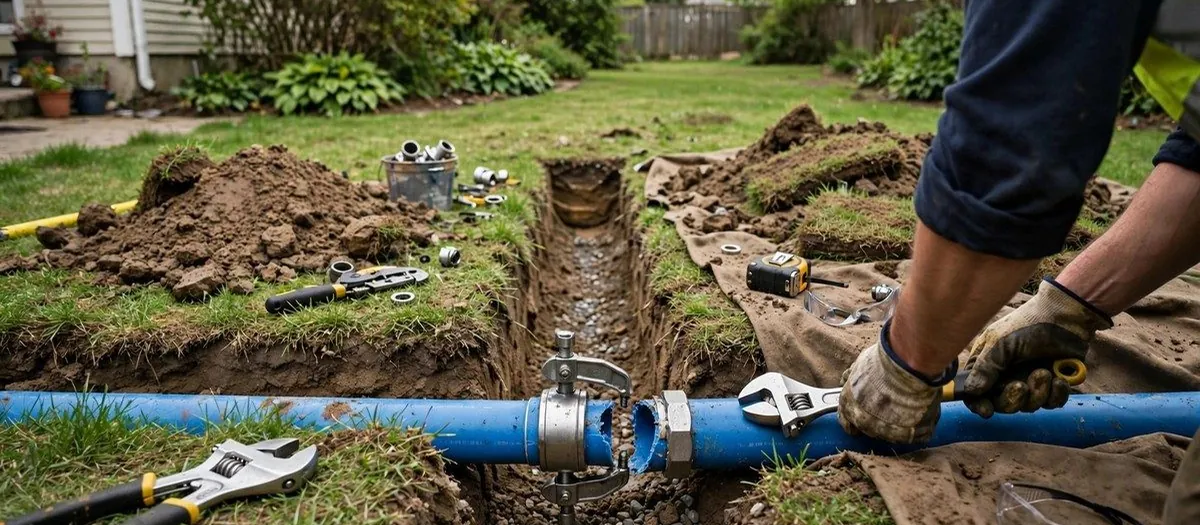
Sometimes. A trench is the traditional method. Trenchless methods pull a new pipe through the old path from two small pits, which leaves less lawn and driveway damage. Soil, depth, obstacles and the pipe condition decide which method fits.
A single leak on a pipe in good shape can often be fixed with a short section. If the line is old, corroded or has failed more than once, replacing it from the meter to the house avoids repeat digs.
The city reports it has found no lead service lines, but it is still collecting owner questionnaires to complete its inventory. If your line is being replaced, ask what material you are removing and what the new pipe is.
Vineland has its own water utility and its own service line program. We serve Vineland as well, and the process for finding the shutoff and the street side is similar. Ask your utility where its responsibility ends.
When a service line leak is an emergency
A service line leak is an emergency if water is surfacing fast, the yard is eroding, the house has lost pressure or the meter is spinning with everything closed. Water in the soil can undermine a driveway, walkway or foundation edge over time.
Close the main valve inside the house first. If the valve will not close or the water is clearly on the street side, call the Millville Water Utility emergency line at 856-825-7000 ext. 7613, then call us.
Low pressure, wet yard or a meter that will not stop?
These three symptoms often share one cause: a damaged line between the street and the house. Low pressure comes from water escaping before it reaches your taps. A wet yard is that water surfacing. A meter that will not stop is the meter counting the loss.
The branded term for the fix is water service line repair, and it starts with finding where the leak is. A leak detection visit can place the break before anyone digs.
How we find the problem on the line
The goal is to dig once, in the right place.
- Check the basicsConfirm the main valve is fully open and the pressure regulator is working. A partly closed valve can mimic a leak.
- Run a meter testWith everything off, read the meter, wait, and read again. Any movement means water is leaving the system.
- Isolate the lineClose the house main to see whether the meter still moves. If it does, the leak is on the service line.
- Listen and markAcoustic listening on the exposed pipe ends and along the route narrows the leak to a short stretch.
- Choose the repairWe explain the spot repair, section replacement or full replacement, and the price comes before any digging.
Repair or replace the water service line?
The right choice depends on the pipe's age, material and how many times it has failed.
| Situation | Better fit | Why |
|---|---|---|
| One leak, pipe in good condition | Spot or section repair | Smaller dig, shorter water shutoff |
| Several leaks along the run | Full replacement | More patches mean more digs and more risk |
| Old galvanized or unknown material | Full replacement | Interior rust narrows the pipe and weakens walls |
| Lawn, driveway or tree roots in the way | Trenchless replacement | Two small pits instead of a long trench |
| Lead line or lead joints found | Full replacement | Removing lead is better than repairing it |
| Low pressure with no leak found | Test regulator and house piping first | The cause may be inside the house |
No single row decides. The pipe's condition after the leak is exposed often changes the plan.
Trench or trenchless: what changes
A trench exposes the full pipe, which makes it easy to inspect and replace, but it removes lawn, walkways or driveway along the route. Trenchless work uses entry and exit pits and pulls the new pipe through the old path.
Trenchless is not always possible. Tight bends, shallow depth, other utilities or a collapsed old pipe may force open digging. Ask which method fits your yard and what restoration is included in the scope.
Low pressure is not always the service line
Low pressure across the whole house can come from a partly closed main valve, a failing pressure regulator, clogged interior pipes or a leak on the service line. One weak faucet usually points to a clogged aerator or cartridge instead.
If your house has older steel piping, the narrowing inside can cut flow even when the service line is fine. In that case, repiping may be a better answer than digging the yard.
Wet spot beside the meter box
Water near the meter box can come from the utility's side, the fitting on your side or the line past it. A quick look at which side of the meter is wet helps decide who should be called.
Do not dig around the meter yourself. Contact the Water Utility if the leak is at the meter, and call us if it follows the pipe toward the house.
Millville's service line program and what it means for you
The city's Water Utility says it has found no lead service lines in Millville. It is collecting service line material questionnaires from owners to complete its inventory, and a city program page describes a plan to replace lead and galvanized service lines over ten years.
For you, that means two practical steps. Tell the city what your service pipe is made of, and ask the Water Utility where the city's responsibility ends before you hire anyone to dig. If your line is replaced as part of a city program, confirm whether your side is covered.
Neighbors in Vineland deal with a separate utility, so the process there differs. See our Vineland plumber page for service in that city.
Source type: City of Millville Water Utility web page, 2026 Consumer Confidence Report and city service line program page.
Before the plumber arrives
A little preparation speeds up the visit.
- Locate the main shutoff inside the house and confirm it closes fully.
- Write down the meter reading and the time, then check again after a short wait.
- Note where the yard is wet, soft or sinking, and keep children away from it.
- Clear the path to the meter box and the house entry point of the line.
- Photograph the wet area for insurance and for the plumber.
- Tell us if the line has been repaired before, and where.
When the break involves pipes inside
If water also appears inside the home, a split in a branch line may be the cause. Burst pipe repair covers that situation, and the two problems can happen together.
What changes the price
Every job gets a clear price before work starts. These are the things that move it up or down.
A short run takes less pipe and labor than a long line across a deep lot.
Deeper pipe and compacted or rocky soil take more time to excavate.
Each method needs different equipment and restoration work.
Driveways, patios, trees and landscaping affect access and the scope of restoration.
The new pipe, valves and connection to the meter side change the materials list.
Sources and standards
These are the references behind the guidance on this page. Rules and contacts change, so confirm details with the agency.
- New Jersey Uniform Construction Code, plumbing subcode (the Millville Construction Office posts the permit form)
- State Board of Examiners of Master Plumbers, Division of Consumer Affairs, for checking any plumber's license
- City of Millville Water Utility and its annual Consumer Confidence Report
- 811 call-before-you-dig service, before any excavation