
Common Questions About Leak Detection in Millville
Yes. Our emergency line is open 24/7, including nights, weekends and holidays. We do not promise an arrival time, but we do book same-day appointments when available.
While you wait, close the main shutoff, switch off power to any wet area if you can reach the panel safely, and move belongings out of the water's path.
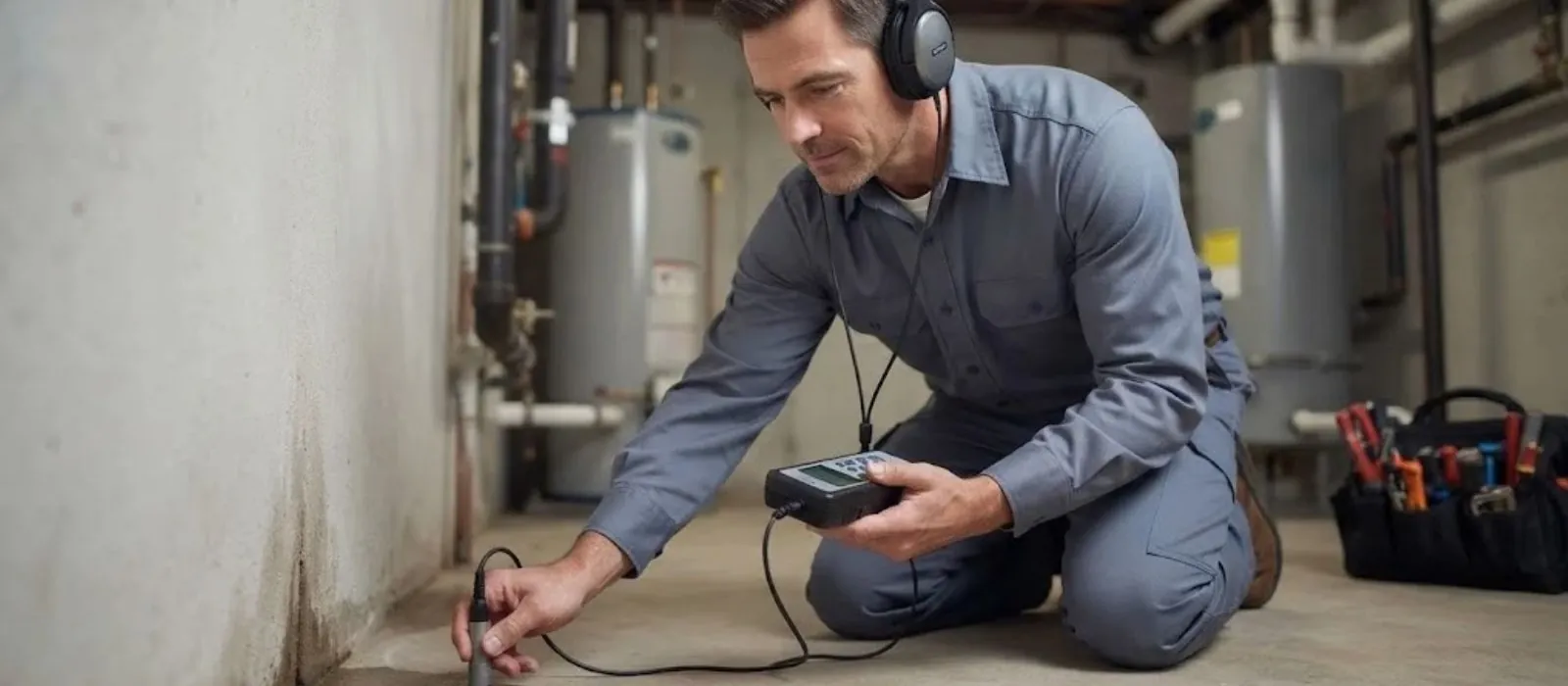
A plumber starts with a meter test to confirm that water is leaving the system, then narrows the zone with pressure tests on each line. Acoustic listening gear picks up the sound of water escaping from a pressurized pipe through floors, soil and walls.
Thermal imaging and moisture meters help on ceilings and walls. Tracer gas and camera work are used when the other methods leave doubt. Opening a surface is the last step, and it happens at the marked spot.
It means water is passing through the meter when no fixture should be calling for it. The usual suspects are a running toilet, a dripping fixture, a leaking water heater connection or a break in the pipe between the meter and the house.
Check toilets first, since a flapper that does not seal can run quietly. If the meter still moves with every fixture closed, the leak is real and worth tracing.
Often, yes. Pipes under a slab leave clues such as a hot spot on the floor, a hissing sound, damp flooring or a meter that moves with the house shut down. Listening gear and pressure tests on each branch line narrow the area before anyone breaks concrete.
Repair options depend on the pipe's path and condition. A rerouted line overhead is sometimes cleaner than opening the floor, and we explain both before you decide.
Pool plumbing can be tested for leaks in the supply and return lines. Evaporation and a cracked shell are different problems, so a simple bucket test comes first to tell water loss from normal evaporation. Call the emergency line if you are unsure which situation you have.
Yes. Irrigation lines sit under pressure and leak at fittings, valves and buried joints. Soggy ground, a zone that runs weak and a wet patch near a valve box are the common signs, and we can isolate each zone with a pressure check.
The Water Utility maintains the mains and can speak to the street side of the system. Leaks on your own piping are normally the owner's to trace and fix. Ask the utility where its responsibility ends before you plan any digging.
Commercial buildings often have more branches, longer runs and hidden risers, which can slow the search. We handle the leak tracing and can bring in the commercial plumbing team for larger systems. Tell us how many floors and what kind of pipe you have when you call.
When a hidden leak is an emergency
A hidden leak becomes an emergency when water is visibly spreading, a ceiling is sagging, the floor feels warm or soft, or the meter spins fast with everything closed. At that point every hour adds damage to drywall, subfloor and insulation, and the bill keeps growing.
Close the main shutoff valve at the house, then call the 24/7 line. If a ceiling is bulging with water, stay out from under it. A small hole poked at the lowest point can release trapped water in a controlled way, but only if no light fixture or wiring is nearby.
Water bill climbing or meter moving with everything off?
Most people only learn about a hidden leak from a bill that makes no sense, a musty smell, or a soft patch of floor. The leak itself is quiet, and the water is leaving through a crack, a loose joint or a failed fitting you cannot see.
That is where leak detection comes in: a set of methods that tell us where the water is going before anyone cuts anything open. The method depends on the symptom, which is why the first call is about what you see, hear and read on the meter, not about tools.
The meter test: is water moving when it should not?
This check takes a few minutes and tells you whether the leak is real. Do it before you call so you can describe what you saw.
- Shut everything offStop the dishwasher, washer, ice maker and irrigation. Make sure no one runs a tap or flushes a toilet during the test.
- Read the meterOpen the meter lid and find the small low-flow indicator or the dial. Write down the reading and note whether the indicator is turning.
- Wait and compareWait fifteen minutes without using any water, then read it again. Any change means water is moving through the system.
- Close the house mainShut the main valve inside the house and check the meter once more. If it still moves, the leak sits between the meter and the valve. If it stops, the leak is inside.
Which symptom points where, and how we confirm it
Use this as a guide, not a diagnosis. Several symptoms can share one cause, and the method matters as much as the location.
| Symptom | Likely location | How it is found |
|---|---|---|
| Meter moves, house is dry | Buried line between meter and house | Isolate with the main valve, then listen along the route |
| Warm spot or hiss on the floor | Hot line under a slab | Thermal check, listening gear, pressure test per line |
| Stain spreading on a ceiling | Supply or drain above the room | Moisture meter, thermal scan, access at the marked spot |
| Musty smell, damp subfloor | Crawlspace or under-house piping | Visual check, moisture reading, line by line pressure test |
| Weak zone, wet patch in the yard | Irrigation line or valve box | Zone isolation and pressure check |
| Pressure drops overnight | Anywhere on the pressurized side | Gauge test, then split the system in halves |
No single tool finds every leak. A good diagnosis usually combines two methods, so the answer does not rest on one guess.
Slab leaks: warm floors, hissing and damp edges
Homes on a concrete slab hide some supply lines under the floor. When one of those lines leaks, the signs often show up away from the leak: a warm spot underfoot, a faint hiss when the house is quiet, damp carpet along a wall, or water at the foundation edge.
We test each branch line, isolate the leaking one and then listen along its path to mark the spot. From there you can choose between breaking the slab at that point or rerouting the line through the attic or walls, a choice that changes both the mess and the cost drivers.
Ceiling and wall leaks
A stain on a ceiling is where water landed, not where it started. The source can be a supply line, a drain, a shower pan, a roof penetration or a condensation problem on an air handler.
Moisture readings and a thermal scan separate a plumbing leak from the others. If a plumbing line is the cause, the repair can often be confined to a small access cut. If the roof is the source, you will want a roofer instead, and we will tell you that plainly.
Crawlspace and under-house leaks
Piping under a raised floor is easier to reach than piping in a slab, but leaks can still go unseen for months. The first signs are a musty smell, sagging insulation, rust on hangers and soft spots in the subfloor.
A plumber can pressure test each line from the crawlspace, then look for drips, staining and corrosion along the run. Wet insulation and mold risk make this a job to start soon rather than wait on.
Underground and buried line leaks
The water service line runs from the street connection to the house, and a leak on it can run for a long time without showing at the surface. Sandy ground may swallow the water, so the yard looks dry while the bill climbs.
Listening gear on the exposed ends of the line, such as the meter and the house shutoff, can place the leak within a short stretch. Once it is marked, water service line repair options include a spot repair, a section replacement, or a full new line.
Methods we use to find a leak without guessing
Each method answers a different question. We pick the ones that fit your symptoms.
- Meter test to confirm that water is leaving the system when all fixtures are closed.
- Pressure test of hot, cold and branch lines to see which one loses pressure.
- Acoustic listening on pipes, floors and soil to hear water escaping under pressure.
- Thermal imaging to spot the warm path of a leaking hot line behind a surface.
- Moisture meter readings to map the edge of wet drywall, flooring or framing.
- Tracer gas on lines where sound is hard to hear, such as plastic pipe.
- Camera inspection of drain lines when the leak may be on the waste side.
Sprinkler, pool and yard leaks
Irrigation systems leak at valves, risers and underground joints, and the symptom is often a wet patch or weak spray in one zone. We isolate each zone, pressure test it and mark the failing fitting.
Pools and spas have supply and return piping that can be tested the same way, after a simple bucket test rules out ordinary evaporation. A wet spot beside the meter box is worth reporting, since it may mean a fitting at the meter connection, which can be the utility's side.
Leak detection for shops, restaurants and offices
Commercial buildings have more branches, risers and shared walls, so a leak can travel before it shows. Tell us the building type and whether tenants share the water, because that changes how we isolate each section.
For larger systems or ongoing work, see our commercial plumbing page. Many businesses call after hours, and the same 24/7 line applies.
Millville meters, the Water Utility and your side of the pipe
Millville's water comes from ten city-run wells in the Cohansey and Kirkwood aquifer, so the Water Utility is the first call for anything on the street side of your connection. Its emergency line is 856-825-7000 ext. 7613, and the office keeps weekday hours from 7:00 am to 3:30 pm.
That matters when your meter moves with the house shut down. If the leak is on your side, we can trace it. If it is at the street connection, the utility should hear about it quickly, and you should ask where the city's responsibility ends.
The city says it has found no lead service lines and is still collecting owner questionnaires to complete its inventory. A leak search is also a good time to note what material your service pipe is, since the city is asking owners for that detail.
Source type: City of Millville Water Utility web page and 2026 Consumer Confidence Report.
What to do while you wait for a plumber
These steps limit damage while the line is open. Stop at the first one if water is moving fast.
Close the main
Turn the house shutoff clockwise until it stops. Then open one low faucet to relieve pressure.
Protect the power
If water is near outlets, a panel or appliances, stay out and turn off power only from a dry spot.
Photograph the damage
Take clear photos of stains, wet areas and the meter reading. They help with an insurance claim.
Move what you can
Lift rugs, boxes and small furniture away from the wet area, and set towels or a wet vac to slow spread.
Related work you may need next
A found leak often points to a repair on the line itself. If a section split open, burst pipe repair covers the first steps. If the pipes keep failing in several places, repiping is worth discussing, and neighbors in Vineland can reach us through our Vineland plumber page.
What changes the price
Every job gets a clear price before work starts. These are the things that move it up or down.
A leak in an open crawlspace is quicker to trace than one behind tile or under a slab, and the time on site changes accordingly.
A simple meter test is a short visit. A leak that needs listening gear, thermal work and a camera takes longer.
More fixtures, floors and zones mean more lines to isolate and test.
Finding the leak and fixing it are different jobs. Opening a wall or slab, then patching, adds its own scope.
Calls on nights, weekends and holidays are dispatched through the 24/7 line, and the price is given before work starts.
Sources and standards
These are the references behind the guidance on this page. Rules and contacts change, so confirm details with the agency.
- New Jersey Uniform Construction Code, plumbing subcode (the Millville Construction Office posts the permit form)
- State Board of Examiners of Master Plumbers, Division of Consumer Affairs, for checking any plumber's license
- City of Millville Water Utility and its annual Consumer Confidence Report