
Common Questions About Drain Cleaning in Millville
Yes. The emergency line is staffed around the clock, including nights, weekends and holidays. We offer same-day appointments when available, and we do not promise a set arrival time, because the honest answer depends on the day's calls. The dispatcher will ask where the water is coming up and which fixtures are affected, so the right equipment goes on the truck.
Run water in a fixture on the lowest level of the house, then flush a toilet upstairs. If one sink is slow and everything else drains fine, the clog is in that fixture or its short branch. If several fixtures slow down together, or a tub or floor drain gurgles when you flush, the blockage is likely in the main line.
It is a poor first move. The liquid sits on top of a standing clog, can damage some pipes and fixtures, and leaves a caustic mess for whoever opens the trap afterward. If you already used some, tell us when we arrive so we can wear the right protection.
A snake, also called a cable or auger, drills through a clog to restore a channel. Hydro jetting uses high pressure water to scrub the pipe wall. Snaking suits a soft or isolated blockage. Jetting suits grease, scale and repeat clogs. Our hydro jetting page explains when each one makes sense.
Grease and food residue cool and harden inside the pipe, so each clearing leaves a narrower channel than before. A repeat clog in the same sink usually means the buildup further down the line is still there. A cable pass past the trap and a camera look can tell you whether the pipe needs more than a quick fix.
Often yes. Hair and soap sit near the drain opening, so a small hand tool or a short cable through the strainer opening can reach them. If the blockage is deeper or the tub overflow is involved, the approach changes, and we will explain it before work starts.
The Millville Sewer Utility says the property owner maintains and cleans the sewer lateral, the pipe from your house to the city main. The utility also asks residents with drain problems to call it first, since its staff check the sewer main and report what they find. That call can tell you whether the blockage is yours or the city's.
According to the city's FAQ, the Sewer Department does not replace a loose or missing cleanout cap. The homeowner does. An open or broken cap lets debris and odors into the line, so it is worth fixing before it turns into a bigger service call.
When a clogged drain is an emergency
Most clogs are a nuisance. A few are not. Water coming up through a floor drain, a basement fixture or a tub when you run the washing machine usually means the blockage is in the main line, and everything you do upstairs adds to the mess.
Treat it as an emergency when sewage is entering the house, when no toilet in the home will flush, or when a single bathroom is the only one you have. Call the 24/7 emergency line, and we will ask the questions that decide which tool goes on the truck.
If a clog is limited to one sink and the rest of the house works, you can usually wait for a same-day appointment when available.
Find the clog before you pick a tool
The cost and the method both depend on where the blockage sits. A short branch is a different job than a main line, so the first question is location, not equipment.
| Where the clog is | What you will notice | Usual tool |
|---|---|---|
| Fixture trap or tailpiece | One sink or tub is slow, others are fine | Hand tool, small cable |
| Branch line | A bathroom group or kitchen run drains slowly or gurgles | Drum cable machine |
| Main drain inside the house | Several fixtures slow together, a floor drain backs up | Larger cable, then a camera look |
| Lateral toward the street | Lowest drain overflows first, toilets sluggish | Heavy cable or jetting, camera |
| Repeat clog in the same spot | Clears for days or weeks, then returns | Jetting or a camera check for damage |
If a camera shows a cracked, offset or collapsed section, cleaning only buys time. In that case the next step is sewer inspection results and a repair plan, not a bigger cable.
How drain cleaning works, step by step
Every job follows the same logic, even when the equipment changes.
- Locate the stoppageWe ask which fixtures are affected, then test water flow to narrow down the branch or main line.
- Choose the least aggressive tool that worksA hand tool or small cable comes first for a fixture. Machines and jetting come in when the clog is deeper or has returned.
- Clear and confirmWe run water through the line to confirm it flows freely, not just that the cable passed through.
- Look for the reasonA clog has a cause. Grease, roots, a belly in the pipe or a flushed item each call for a different follow-up.
Drain snaking and cabling
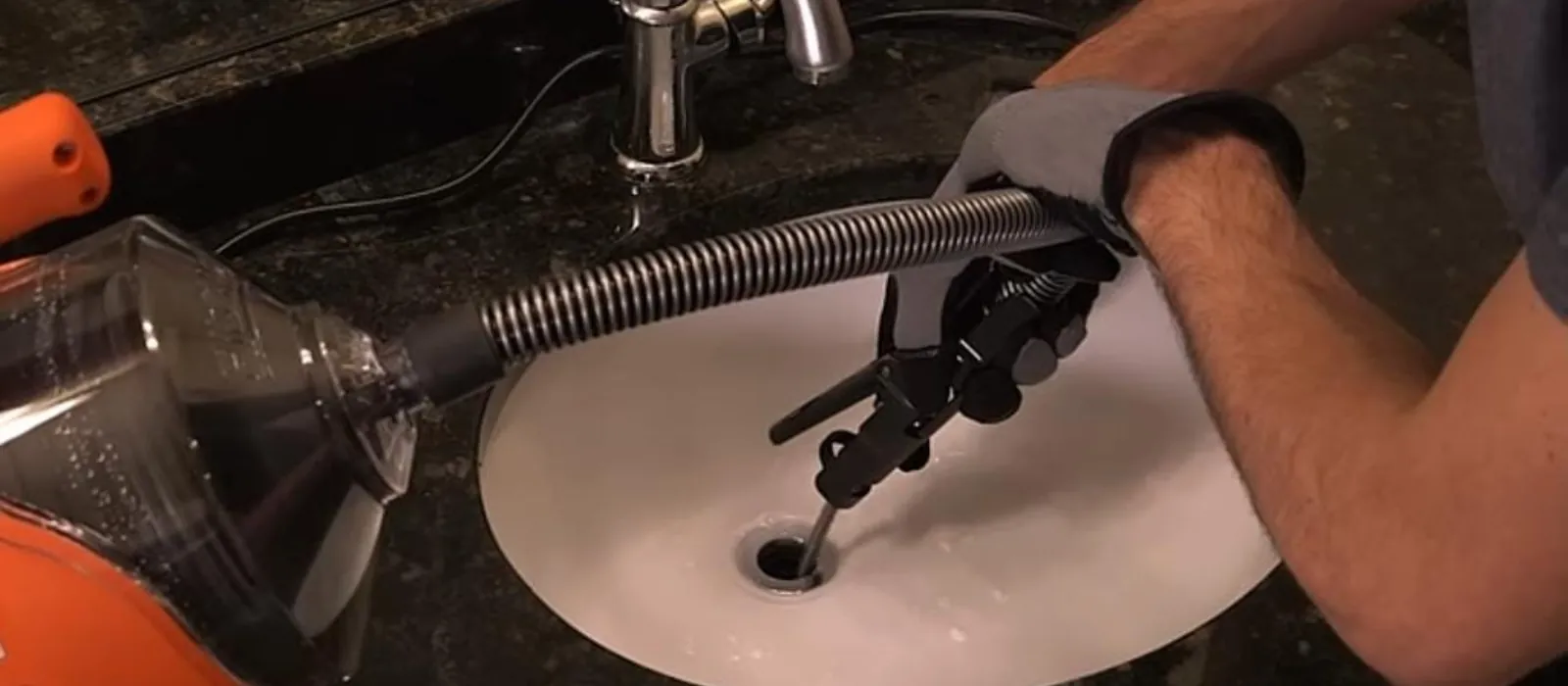
Snaking is the most common way to open a blocked line. A flexible steel cable with a cutting head spins into the pipe, breaks up the obstruction or hooks it so it can be pulled back. Light cables handle sink and tub branches, while a heavier drum machine reaches farther into a main.
A cable does not clean the pipe wall. It pokes a hole through the blockage, which is why a snaked kitchen drain can slow down again within weeks. If a line has clogged more than once, ask for jetting or a camera pass instead of another round of the same fix.
Broken cable ends and tools left in a pipe are a real problem for later drain work. Tell the technician if a snake or an item is already stuck in the line.
Kitchen sink and laundry drain clogs
Kitchen lines carry grease, starch and food scraps. Those cool into a paste that coats the pipe, then catch every new scrap. A disposal grinds food finer but does not stop fat from sticking farther down.
A washer drain clogs differently. Lint and detergent residue build up in the standpipe, and a backed-up washer that overflows the standpipe can mean the shared branch or main is also partly blocked. If the washer backs up and a nearby floor drain gurgles, treat it as a main line problem.
If your garbage disposal hums and the sink does not drain, the jam may be in the unit, not the pipe. Our garbage disposal repair page covers that case.
Shower and tub drains
Hair and soap scum catch at the top of the drain, usually within reach of a hand tool. Pulling the stopper or strainer and cleaning it is a safe first step you can try yourself.
If water backs up in the tub when a toilet flushes or the washer runs, the blockage is lower in the line and a stopper cleaning will not fix it. Standing water that smells like sewage is a sign to stop using the fixtures and call.
Why chemical drain cleaners are a poor first move
Caustic liquids work on soft organic buildup in a clear pipe. A standing clog gives them nothing to flow through, so they sit, heat up and can soften some plastic fittings or damage older metal traps.
Whoever opens the drain next may be working over a bath of harsh chemical. A cable or hand tool is cleaner, faster and gentler on the plumbing.
Main line clogs and the city's role
When several fixtures back up at once, the blockage is usually in the main drain or the lateral. In Millville, the Sewer Utility asks residents with drain problems to call it first, because its staff check the sewer main and report what they find. If the city main is clear, the problem sits in your lateral, and the city page says the owner maintains and cleans it.
That sequence saves you money. A short call to the city, followed by a plumber if the main is fine, keeps you from paying to clear a line that is not yours to clear. See our sewer line cleaning page for how a main line job runs.
Check your cleanout cap while you are at it. The city's FAQ says a loose or missing cap is the homeowner's job to replace. We also cover Vineland, where a different city utility handles the main.
Drain pipe damage and repeat clogs
Not every clog is a blockage in a healthy pipe. A cracked or sagging section catches solids, and roots enter through joints. In those cases, clearing the line buys time but the clog returns.
A camera look at the line shows which kind of problem you have. If the pipe is damaged, a repair or lining discussion belongs on the table, and a leak under the slab or in the yard may need separate attention.
A drain line that leaks into a wall or ceiling is a different job from a clog. Stop the flow to that fixture and call, and we will sort it out.
Local note for Millville homes and businesses
The Millville Sewer Utility is city-run and has staff on call around the clock, every day of the year. Its lines run to a treatment plant on the Maurice River. For you, that means a drain problem has a real first phone call: the Sewer Utility at 856-825-7000, which can tell you whether the main is clear.
The city also has a grease and oil ordinance aimed at stopping fats from reaching the sewer, with food businesses in mind. If you run a kitchen, a regular drain cleaning schedule is cheaper than an emergency, and it keeps you on the right side of that rule.
Source type: City of Millville Sewer Utility page and city FAQ.
Keeping drains clear between visits
Small habits prevent most repeat calls.
- Wipe greasy pans with a paper towel before washing, and put cooled fat in the trash, not the sink.
- Use drain strainers in showers and tubs, and empty them before they fill.
- Flush only toilet paper and human waste, including products labeled flushable.
- Run hot water for a minute after washing dishes to move residue along.
- Keep the cleanout cap on and tight, and know where the cleanout is.
- Schedule a camera check if the same drain has clogged twice in a few months.
What changes the price
Every job gets a clear price before work starts. These are the things that move it up or down.
A trap or short branch takes less time and equipment than a main line, which can mean a larger machine and more access work.
A clear cleanout makes the job straightforward. If the line has to be reached through a toilet or roof vent, the work takes longer.
A hand tool, a cable machine and a jetting rig are different pieces of equipment with different setup time.
Roots, grease and a damaged pipe each call for a different follow-up, and a camera check adds time to the visit.
After-hours emergency calls are handled on the 24/7 line, and you get a clear price before work starts.
Sources and standards
These are the references behind the guidance on this page. Rules and contacts change, so confirm details with the agency.
- New Jersey Uniform Construction Code, plumbing subcode (the Millville Construction Office posts the permit form)
- State Board of Examiners of Master Plumbers, Division of Consumer Affairs, for checking any plumber's license
- City of Millville Sewer Utility guidance on laterals, cleanouts and sewer overflows