
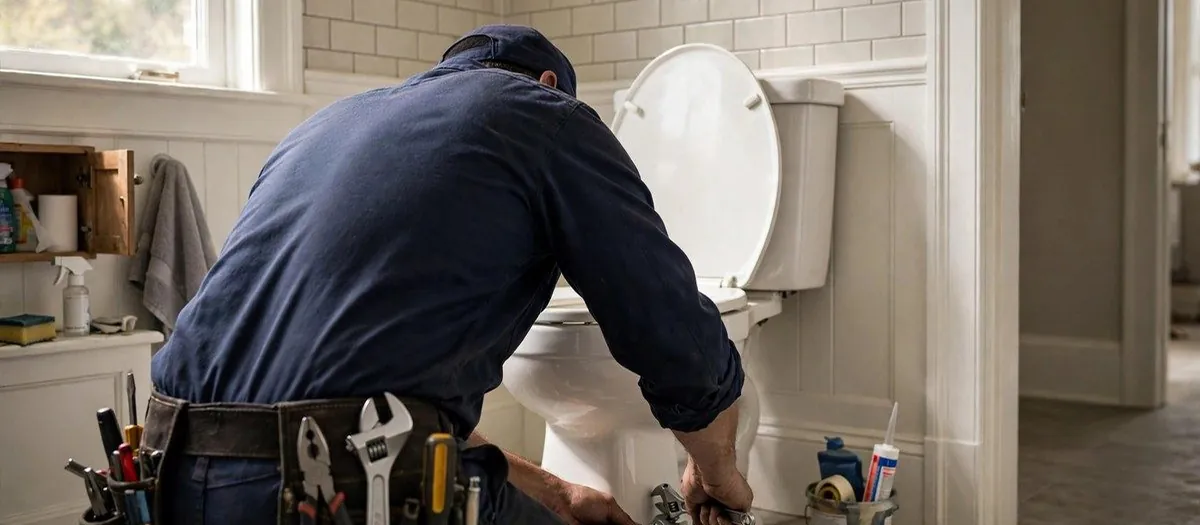
Common Questions About Toilet Repair in Millville
Yes. Our emergency line runs 24/7, and we offer same-day appointments when available for toilet problems that are not urgent. Call, tell us what the toilet is doing, and we will dispatch for overflows, active leaks and clogs that have stopped a bathroom from working. We do not promise an arrival time, but we do tell you the price before we start.
Rocking usually means the bowl is no longer seated firmly on the flange, or the closet bolts have loosened. A rocking bowl strains the wax seal, so a slow leak often follows. The fix may be as simple as new bolts and shims, or it may mean pulling the toilet to repair the flange.
It depends on how much water you see. A steady puddle after each flush means the seal is failing and the subfloor is getting wet, so shut the valve and call. A faint damp ring may wait for a same-day visit, but keep the toilet out of use until it is checked.
Often a worn flapper or a fill valve that will not shut off is the cause, and both are small repairs. A running toilet wastes water and can raise your bill, so do not leave it for weeks. If the tank looks fine and the sound continues, the problem may be a slow leak into the bowl.
That points past the toilet. When a tub, floor drain or sink reacts to a flush, the blockage is usually in the shared branch or main line. We would then recommend drain cleaning or line cleaning rather than a toilet repair.
A kit is enough when the flapper, fill valve or flush handle is the only failed part and the tank is not cracked. A kit does not help with a bad flange, a crack in the porcelain or a clog. If you try one and the symptom returns, call us before you buy another.
A toilet that leaks into the bowl can waste water for weeks without any sign. Fix it first, then ask the Millville Water Utility how your account is billed and whether it can review recent use. The Utility is city run and sits under Public Works.
When a toilet problem is an emergency
A toilet becomes an emergency when water will not stop, when sewage comes up from the bowl or floor drain, or when the only bathroom in the home is out of use. Water on the floor also means damage is growing under the flooring. Treat any of these as a call-now situation.
A slow drip at the base or a toilet that runs for a minute after each flush is different. Those can wait for a same-day appointment, though they should not wait for weeks. Water in a subfloor can rot wood quietly, long before a stain appears.
What the symptom usually means
Use this as a quick guide. It narrows the cause, but a plumber still needs to look before choosing the fix.
| Symptom | Likely cause | Typical fix |
|---|---|---|
| Water rising in the bowl | Clog in the trap or drain | Plunge once, then call if it keeps rising |
| Puddle around the base | Failed wax ring or loose bolts | Reset the toilet with a new wax ring |
| Toilet rocks side to side | Loose bolts or damaged flange | Tighten, shim or repair the flange |
| Runs after flushing | Worn flapper or fill valve | Replace the part, adjust the float |
| Weak flush | Clogged rim jets or low tank water | Clear the jets, reset the water level |
| Crack or damp tank | Cracked porcelain | Replace the toilet |
If a symptom does not match any row, describe it to us when you call. A sound or a smell often helps narrow the cause.
Stop the water first
These steps limit damage while you wait. None of them needs tools.
Close the shutoff valve
Turn the small valve on the wall or floor behind the bowl clockwise until it stops. If it spins freely or leaks, shut the main valve instead.
Lift the tank lid
Push the rubber flapper down and hold it. If the water stops, the flapper or fill valve is the likely culprit.
Do not flush again
Another flush on a blocked line puts more water on the floor. Stop using the toilet until it is cleared.
Check other fixtures
If a tub or sink gurgles, note which ones. That detail tells the plumber the blockage is likely in a shared line.
Wax rings, flanges and a toilet that will not stay put
The wax ring sits between the bowl and the drain flange, and it seals out water and sewer gas. It is cheap and simple, but it fails if the toilet moves, if the flange sits too low, or if the bowl was reset without a fresh ring. A leak at the base after a flush almost always traces back to this seal.
A damaged flange is the harder repair. If the flange is cracked, corroded or sitting below the finished floor, a new wax ring alone will not hold. We would pull the toilet, inspect the flange and tell you the repair options and price before any work starts.
Repair or replace the toilet?
Repair when the problem is a part: a flapper, fill valve, handle, supply line or wax ring. Replace when the porcelain is cracked, the toilet clogs again and again, or repairs keep adding up on a fixture that is already old. A cracked tank or bowl cannot be patched safely.
If you choose replacement, we handle the new setup as part of plumbing installation, including a new supply line, wax ring and a firm seat on the flange.
Clogs and backups that go beyond one toilet
A single toilet that is slow to drain usually has a clog close to the bowl. When two fixtures react at the same time, such as a toilet that gurgles when the shower runs, the obstruction is further down the line. Plunging will not help there, and repeated flushing makes the mess worse.
That pattern is a main line problem, and the right service is clearing the main sewer line rather than a toilet repair. In Millville, the property owner maintains the sewer lateral, and the city Sewer Utility asks residents with drain problems to call it first so staff can check the main. Do that after you stop the water, and tell us what the Utility finds.
How a toilet repair visit works
The sequence is the same for most calls, from a running tank to a rocking bowl.
- Describe the symptomTell us what the toilet does and when. We note whether other fixtures are affected.
- Inspect the tank, bowl and baseWe check the flapper, fill valve, supply line, bolts and seal to find the failed part.
- Get the priceYou hear the repair options and the price before we open the toilet up.
- Repair or resetWe replace the part or reset the bowl with a new seal, then test several flushes.
- Check the floorWe look at the floor and base after testing so any new seepage shows up now, not next week.
Serving homes near Millville
We dispatch from Millville and also work in nearby towns. If you are north of us, our page for a plumber in Vineland lists the ZIP codes we cover there. Calling the 24/7 line works the same from any of them.
What changes the price
Every job gets a clear price before work starts. These are the things that move it up or down.
A flapper or fill valve is a small repair. A flange repair or a full toilet replacement takes more time and materials.
Tight bathrooms, boxed in plumbing or a toilet on an upper floor can add labor.
If a long leak has softened the subfloor, the toilet cannot be reset until the floor is repaired.
A new toilet's size, flush type and brand change the material cost. We tell you the price before work starts.
After-hours emergency dispatch is priced differently from a planned same-day appointment.
Sources and standards
These are the references behind the guidance on this page. Rules and contacts change, so confirm details with the agency.
- New Jersey Uniform Construction Code, plumbing subcode (the Millville Construction Office posts the permit form)
- State Board of Examiners of Master Plumbers, Division of Consumer Affairs, for checking any plumber's license
- City of Millville Sewer Utility guidance on laterals, cleanouts and sewer overflows