
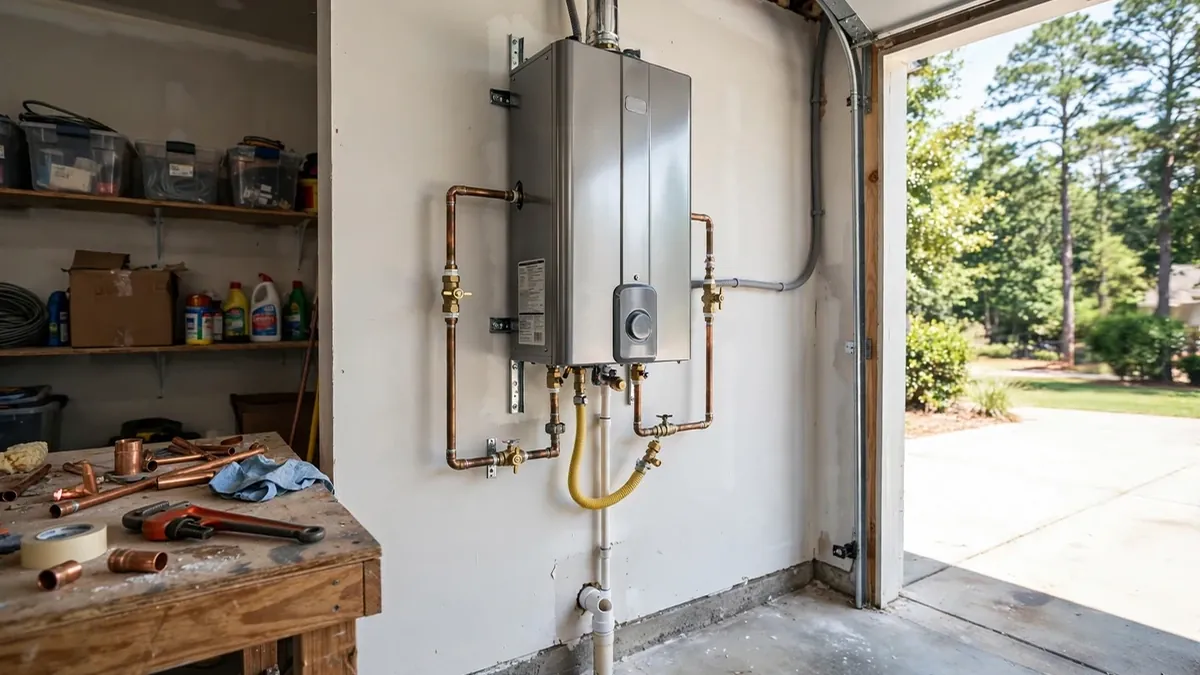
What a recirculating pump actually does
In a normal house, hot water sits in the pipe between uses and cools off. When you open the tap, you wait while that cooled water runs out before fresh hot water arrives. A recirculating pump pushes the water in the hot line back toward the heater, so warm water is already near the fixture.
It does not make the heater hotter or the pipes bigger. It just moves water so the wait is shorter and less water goes down the drain while you stand there.
Two ways to set it up: return line or crossover valve
The choice that shapes the whole job is how water gets back to the heater. Here is how the two common methods compare.
| Decision factor | Dedicated return line | Crossover valve |
|---|---|---|
| How it works | A separate pipe carries water back to the heater | A small valve lets hot water pass into the cold line |
| Where the pump goes | At the heater, on the return pipe | At the heater, with the valve at the far fixture |
| Cold tap effect | None, the cold line stays cold | Cold tap can run lukewarm |
| Pipe work required | Heavy if the house has no return | Light, one valve under a sink |
| Best fit | New builds and open remodels | Existing homes with closed walls |
If your walls are finished and no return pipe exists, the crossover method is the realistic path. Expect lukewarm cold water at the fixture that has the valve.
Pump types and how they decide when to run
The pump itself is only half the choice. The control that starts and stops it matters just as much.
Timer controlled
Runs on a schedule you set, such as morning and evening. It is simple and cheap to run but wastes motion when no one is home.
Thermostat controlled
Starts when the line cools below a set temperature and stops when it warms again. It keeps hot water ready without a schedule.
Demand or button activated
Runs only when you press a button or a sensor sees you. It uses the least energy but needs a short wait each time.
Combination controls
Some pumps combine a timer with a temperature stop. They give schedule control and avoid running when the line is already warm.
Should you install it yourself
If you have a return line, a basic pump swap can look like a plumbing job with a few fittings and a plug. The part that catches people is that you are cutting into the hot water line at the heater, draining part of the system and working near a gas or electric appliance. A leaking connection or a missed isolation valve can flood a basement.
Most homeowners are safest handling the unplugged, no-leak parts, such as picking the pump and clearing a space. The cut-in and the connection to the heater are a good place to call a licensed and insured plumber. Our water heater installation team can look at the layout and tell you which method fits.
The install steps in plain order
These steps describe a typical job. Follow the pump maker's instructions for the actual model, since fittings and power needs vary.
- Choose the methodLook for a return line. If there is none, plan on a crossover valve at the farthest fixture.
- Shut off and drain downTurn off power or gas to the heater and close the cold supply. Open a hot tap to let the line drain to the point of the work.
- Mount the pumpInstall the pump on the hot line or return at the heater, with isolation valves and a check valve so water flows one way.
- Install the return pathConnect the return line, or place the crossover valve under the far sink and tie it to the cold supply.
- Power and controlPlug in the pump or wire it to a suitable circuit, then set the timer or thermostat. Do not run the pump dry.
- Fill, bleed and testOpen the cold supply, bleed air from the pump, restore power to the heater and check every joint for drips.
Power, noise and where it goes wrong
These are the common reasons a new pump disappoints or fails early.
- No nearby outlet, so the pump cannot be plugged in where the manual says it should be.
- Pump run dry during startup because air was not bled from the system.
- Check valve missing, so water flows backward and the pump does nothing useful.
- Pump placed on a flexible line without support, which transmits vibration and noise.
- Timer left running all night, which adds heat loss and uses energy for no benefit.
- Pipe not insulated, so the warm water cools quickly and the pump runs more than needed.
When a recirculating pump is not worth it
If the fixture is close to the heater, the wait is already short and a pump adds little. If the house is rarely occupied, a pump that runs on a schedule is wasted effort. And a very old heater is a poor candidate, since you may be putting money into a system you are about to replace.
The decision rule is simple. Add a pump when the wait at a far bathroom or kitchen is long enough to bother you daily, and when the plumbing layout lets you do it cleanly. Otherwise, look at insulating the hot line or plumbing installation options that shorten the run.
Pump installation in Millville
Millville's water comes from city wells and is soft. Before adding a pump to a home where pressure seems odd, ask the Millville Water Utility about pressure in your area, since a pump cannot fix a supply problem. Soft water also means scale inside a pump is a smaller worry than in hard water regions.
Permit rules depend on the job, so ask the Millville Construction Office before you add piping or move a heater. The city posts the state plumbing subcode form on its construction page. A permit question is cheaper to answer before you cut a pipe than after.
Source type: City of Millville Water Utility web page, 2026 Consumer Confidence Report and Construction page.
Questions People Ask
No, but a dedicated line gives the best result. Without one, a crossover valve under the farthest sink lets the pump move water through the cold line, with a lukewarm cold tap as the trade-off.
It can, because the pump runs and the circulating water loses some heat along the pipes. Timer and thermostat controls reduce the effect. A demand pump has the smallest running time.
Some tankless models have a built in pump or a recirculation setting, and others need an add on. Check the maker's instructions before connecting anything.
On a tank heater, the pump normally mounts near the heater on the hot line or return, with isolation valves on both sides. Follow the instructions that come with the pump, since the direction of flow matters.
It can, if the long wait comes from the distance between the heater and the fixture. If the wait comes from a failing heater or crossed lines, a pump will not fix it. The same layout question applies if you are comparing notes with a neighbor in Vineland or Bridgeton, since each house has its own pipe run.
Sources and standards
These are the references behind the guidance on this page. Rules and contacts change, so confirm details with the agency.
- New Jersey Uniform Construction Code, plumbing subcode (the Millville Construction Office posts the permit form)
- State Board of Examiners of Master Plumbers, Division of Consumer Affairs, for checking any plumber's license
- Manufacturer installation and service instructions for your specific unit