
Three kinds of basement cracks and what each one means
Not every crack needs the same response. Look at direction, width and whether moisture shows up on the surface.
| Crack type | What it looks like | Usual meaning |
|---|---|---|
| Hairline | Thin as a pencil line, often vertical, dry | Normal curing or minor settling, often cosmetic |
| Active leak | Damp streak, drip or white mineral crust along the crack | Water is getting through, so drainage or pressure is the issue |
| Stair-step | Zigzag along block or brick mortar joints | Movement in the wall or footing, needs an assessment |
| Horizontal | Runs sideways across the wall, may bow inward | Pressure pushing on the wall, treat as a structural concern |
| Floor crack | Line in the slab, may seep after rain | Water rising under the slab, often a drainage clue |
A crack that widens, grows longer or changes direction between checks is moving. Moving cracks are a structural question first and a waterproofing question second.
Is the crack the problem or just the way in?
Water in a basement comes from somewhere. Roof runoff that lands near the foundation, soil that slopes toward the house, a gutter that spills at the corner, or water that sits against the wall after heavy rain can all push moisture through the weakest spot.
The crack is often only the exit. If you seal the exit and leave the water outside with nowhere to go, pressure can build and the water finds the next weak point, such as a joint, a pipe penetration or the wall-to-floor seam.
That is why sorting out the source matters more than choosing a sealant brand.
What a DIY crack sealant can and cannot do
Hardware stores sell several products. They fit different jobs.
Hydraulic cement
Sets quickly and can plug a small, steady seep in a masonry wall. It is rigid, so it can crack again if the wall moves.
Epoxy or polyurethane injection
Fills a narrow crack from the inside. It suits a stable crack, but it does nothing about water pressure building outside the wall.
Masonry waterproofing paint
Covers dampness and light seepage on the surface. It can blister and peel if water keeps pushing from behind.
Caulk or flexible sealant
Handles a hairline crack that may flex a little. It is not meant for a crack that leaks under pressure.
Check a crack before you seal it
Spend a few weeks watching. A calm crack and a changing crack call for different repairs.
- Mark both ends of the crack with a pencil and date it, then check again after heavy rain.
- Measure the width with a ruler or crack card and record it each time you look.
- Press a dry paper towel against the wall and see whether it picks up moisture.
- Look for white powder or mineral crust, which means water has been passing through.
- Check outside for downspouts that drain beside the foundation and soil that slopes toward the wall.
- Note whether the wall bows inward or door and window frames in the basement stick.
- Photograph the crack with a ruler in frame so you can compare or show a contractor.
When the fix is drainage, not a patch
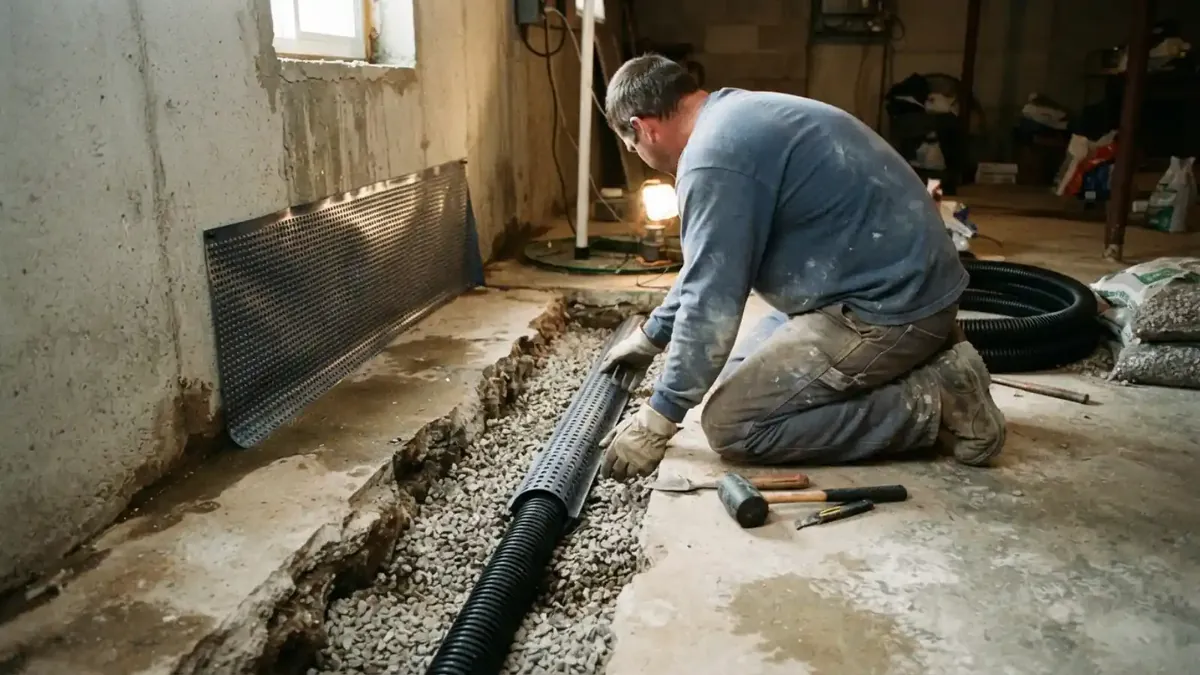
If water appears along the wall-to-floor joint or at several cracks at once, the answer is often to give the water a route out rather than block every entry point. An interior drain channel collects water at the base of the wall and carries it to a sump pit, where a pump sends it away from the house.
That is the idea behind professional basement waterproofing: manage the water that is already there instead of fighting it crack by crack.
Exterior fixes such as regrading, extending downspouts and repairing gutters cost less in effort and often reduce how much water ever reaches the wall. They are worth doing first or alongside any interior system.
Where a sump system fits
A sump pit collects water that an interior drain or the slab lets in. The pump moves it out through a discharge line, so the basement floor stays dry between storms.
If your pit is already in place and the pump runs constantly, short-cycles, hums without moving water or sits silent while the pit fills, that is a sump pump repair call, not a wall problem. Pumps work only as well as their power, float switch and discharge line.
Power outages hit during the storms when you need the pump most, so ask about a battery backup when a system is planned.
Permits and local questions in Millville
Whether foundation, drainage or discharge work needs a permit depends on the job, and the city page does not list which jobs do. The Millville Construction Office at City Hall, 12 South High Street, is open Monday to Friday, 8:30 am to 4:30 pm, and posts the state Uniform Construction Code forms, including a plumbing subcode form.
Ask them before you dig or tie a new pump discharge into anything. A quick call can save you from redoing work, and a contractor you hire should be able to explain what applies to your property.
We do not make soil or groundwater claims for Millville here. A site visit is the way to learn what is happening around your specific foundation.
Source type: City of Millville Construction Office web page.
When to call a professional
Some cracks cannot wait for the weekend. Call promptly and protect the room while you wait. We serve Millville and nearby towns including Vineland and Port Norris, and the 24/7 emergency line is open when water is coming in.
Water is entering now
Move belongings off the floor, keep electronics and cords away from wet areas, and do not touch outlets or appliances standing in water.
The wall is bowing
Stay out of the area near the wall, avoid stacking weight against it and call for an assessment.
A crack is widening
Mark it, photograph it and write down the date. Rapid change is the strongest signal that a pro should look at it.
Water is rising
If the basement is filling and electrical panels or appliances are near the water, leave the area and call for emergency help.
Questions People Ask
Usually not by itself. If it is thin, dry and not changing, it is often cosmetic. Seal it if you like, and keep watching it for width or moisture changes.
Sometimes, for a small stable crack, using an injected epoxy or polyurethane. If water pressure is the cause, the crack will probably reappear or a new leak will open nearby, and drainage is the better answer.
Rain raises the amount of water pressing on the foundation. The crack leaks when the water reaching it is more than the soil and drainage around the house can carry away.
No, but it deserves prompt attention. A horizontal crack suggests sideways pressure on the wall, so have it assessed rather than painting over it.
Not reliably. Paint can hide dampness and handle light seepage, but water pushing from behind will blister it. Treat paint as a finish, not a repair.
The Millville Construction Office. The city posts the state plumbing subcode and permit forms, but it does not say which jobs need them, so ask about your specific work before it starts.
Sources and standards
These are the references behind the guidance on this page. Rules and contacts change, so confirm details with the agency.
- New Jersey Uniform Construction Code, plumbing subcode (the Millville Construction Office posts the permit form)
- State Board of Examiners of Master Plumbers, Division of Consumer Affairs, for checking any plumber's license
- City of Millville Sewer Utility guidance on laterals, cleanouts and sewer overflows