
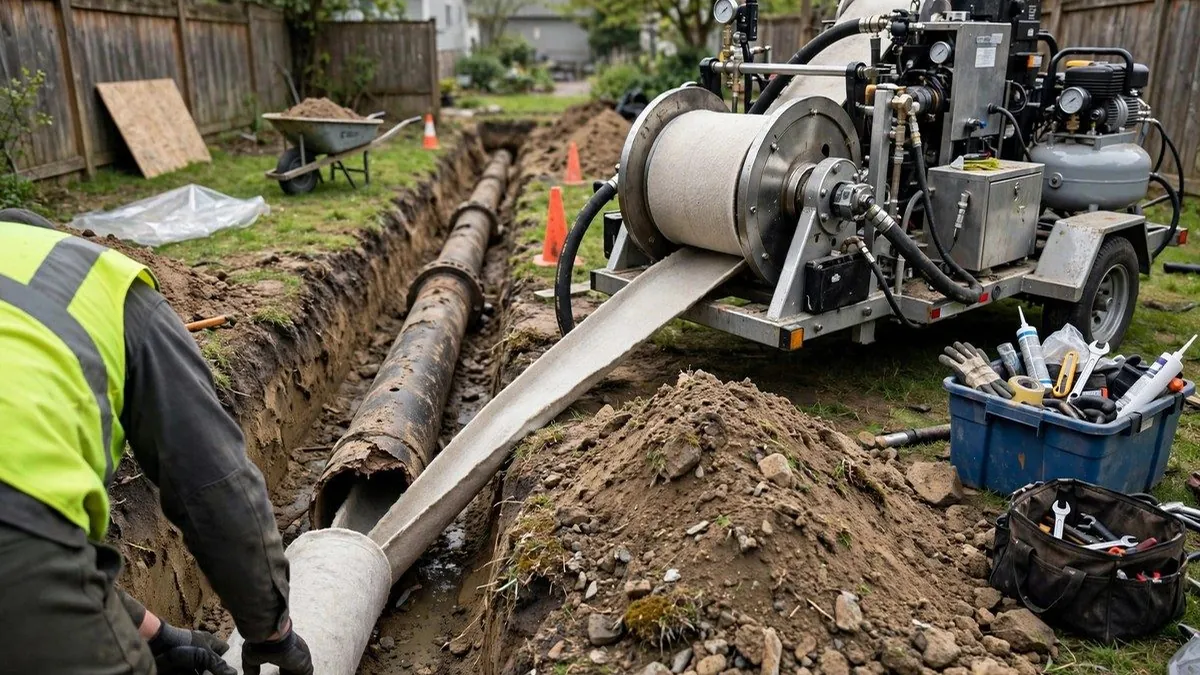
Trench or trenchless: what each does to the yard
The two main methods leave very different marks. Your pipe condition and layout decide which one is possible.
| Method | What happens to the yard | What to expect afterward |
|---|---|---|
| Open trench | A continuous trench is dug along the pipe path | Settled soil strip, reseeding or sod, possible hardscape cuts |
| Pipe bursting | Two pits, one at each end, and the old pipe is pulled apart as the new one is drawn in | Two patches to restore, lawn between them is mostly untouched |
| Pipe lining | Access points only, often through a cleanout | Very little ground disturbance |
| Spot repair | A short section is dug at the failure | One patch restored, size depends on depth |
| Under a driveway or walkway | Cut and remove a section, or tunnel beneath it | Concrete or pavers need patching or replacement |
Not every pipe qualifies for a trenchless method. A camera look at the line is how the contractor learns whether the pipe is intact enough to line or pull through.
The honest list of what usually needs restoring
Lawn and soil are the most common repair. After a trench, the soil settles for weeks as it compacts, so a fresh mound often sinks and needs more topsoil. Seed or sod goes on after the ground has settled, and a new lawn needs regular watering to take hold.
Hardscape is where costs and arguments grow. A walkway, patio, driveway apron or retaining wall in the pipe path may have to be cut. A plumber's job is the pipe, and putting concrete, pavers or landscaping back is often a separate trade with a separate price.
Decide who restores what before the first shovel
Ask each of these questions of any contractor, and get the answers in writing.
- Which method will be used, and what is the planned path of the new line across the property?
- Who backfills and compacts the trench, and is topsoil or seed part of the price?
- If a walkway, driveway or patio is cut, who patches it and when?
- What happens to shrubs, trees or fences in the pipe path?
- Who arranges the utility locate, and who handles the permit or inspection if one applies?
- How and when will the final price be confirmed, and what could change it?
Call 811 before anyone digs
Before any digging project, call 811 so underground utility lines are marked. It is a general safety step for anyone who breaks ground, including a homeowner doing yard repair or planting afterward.
The marks show buried utilities, not your private sewer lateral, so a contractor still needs a camera or locating tool to follow your own line.
How the work and the restoration usually go
A typical job like this follows an order, though your contractor's plan comes first.
- Camera inspectionA camera look at the pipe finds the damage and shows the path, so the scope and method are based on what is actually underground.
- Locate and markUtilities are marked and the pipe path is flagged on the lawn. Ask to walk it with the contractor.
- Replace the pipeThe old line is removed or bypassed, and the new pipe is connected to the house and to the sewer.
- Test and backfillThe new line is tested before it is covered. Soil goes back in layers and is compacted.
- Restore the surfaceRough grading, seed or sod, and patching of any hard surfaces finish the visible work.
Who owns the lateral in Millville
The City of Millville Sewer Utility states that the property owner is responsible for maintaining and cleaning the sewer lateral, and if the problem is in the lateral, the homeowner or business must fix it. In practice that means a replacement on your side of the main is a private job you hire and pay for, with the yard restoration decisions in your hands.
The city FAQ also says a plumber cleaning a sewer line must go past the curb to the center of the street, so the work is not limited to your lawn. Before you plan a replacement, call the Sewer Utility through the City Hall main line and ask where the city's responsibility ends and yours begins.
Source type: City of Millville Sewer Utility page and city FAQ.
Protecting yourself before you sign
Start with a proper diagnosis. A sewer inspection with a camera shows whether you need a full replacement or a smaller repair, which can change how much of the yard is disturbed. Describe your landscaping, driveway and any trees near the line so the plan accounts for them.
Ask the Millville Construction Office whether your job needs a permit, since the city posts the state plumbing subcode form but rules depend on the work. When the scope is clear, our sewer line repair work comes with a clear price before work starts, so you know what the yard repair covers before the digging begins.
Serving homes beyond the city line
We serve Millville and nearby towns, including Vineland and Bridgeton. Each town runs its own utilities, so if your property is outside Millville, ask your local utility who is responsible for each section of the sewer line.
Questions People Ask
Yes with reseeding or sod, but the soil needs time to settle first. Expect to top off sunken areas and keep new grass watered.
It depends on the scope you agree to. Pipe work and surface restoration are often priced separately, so settle it in writing before work starts.
Sometimes. Pipe bursting and lining use small access points, but they only work if the existing pipe is in suitable condition, which a camera look helps confirm.
Yes, call 811 before any digging so marked utilities are not damaged. It applies to homeowners and contractors alike.
The city says the property owner maintains and cleans the lateral and pays to fix problems in it. The Sewer Utility checks the main, so ask them where the city's section ends.
Sources and standards
These are the references behind the guidance on this page. Rules and contacts change, so confirm details with the agency.
- New Jersey Uniform Construction Code, plumbing subcode (the Millville Construction Office posts the permit form)
- State Board of Examiners of Master Plumbers, Division of Consumer Affairs, for checking any plumber's license
- City of Millville Sewer Utility guidance on laterals, cleanouts and sewer overflows
- Cumberland County Department of Health septic program and N.J.A.C. 7:9A
- 811 call-before-you-dig service, before any excavation